The Future of Manhole Rehabilitation: How Coatings Extend Infrastructure Life
-
- August 12, 2024

Ancient wastewater treatment systems are still a major problem for cities and towns in the United States. Corrosion, infiltration, and general structural failure are common problems with manholes, which are normally not given much thought but are vital to the wastewater infrastructure. These problems do exist and they need durable and long-lasting solutions that will cause minimum downtime and maximize on efficiency. Protective coatings are currently one of the best ways to refurbish and strengthen manholes, and of all the coatings available, polyurea is the most effective.
The Need for Manhole Rehabilitation
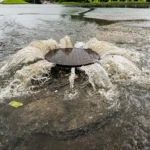
Being continuously exposed to moisture, chemicals, and biological activity, manholes are very prone to deterioration. Hydrogen sulfide (H₂S) gas that is typically present in sewer atmospheres accelerates severe corrosion of concrete and brick structures. However, as these materials degrade they allow for groundwater infiltration which raises treatment costs and may lead to environmental contamination. Cementitious liners and epoxy coatings have been a help to some extent as traditional repair methods, but enhanced durability and application efficiency are provided by modern polymer-based solutions.
The Role of Coatings in Manhole Rehabilitation
Rehabilitation of manholes is not complete without protective coatings that give a nonstick, leak proof seal to prevent water entry and chemical attacks. These coatings not only increase the service life of the structure but also enhance the resistance to wear and corrosion due to microorganisms (MIC).
Why Polyurea Stands Out
Polyurea coatings have the following advantages over other materials:
Fast Cure Time – The curing time of polyurea is another great advantage. Unlike epoxy or cement based coatings which require long drying time, polyurea cures in seconds and reaches its final strength in few hours. This quick turnaround time is very valuable as it allows for minimal downtime and quicker resumption of operations of manholes.
High Chemical Resistance – The chemical content of the sewage is another factor that causes damage to the infrastructure since it contains acids and sulfates. It has been established that polyurea is less porous than most conventional coatings and is therefore more resistant to corrosion that leads to maintenance problems.
Flexibility and Adhesion – Manholes are also prone to settlement and temperature changes which can cause the rigid coatings to break. The elasticity of the polyurea ensures that it can stretch and shrink with the structure without detaching or delaminating.
No gaps or joints – Polyurea is applied in the form of a spray which produces a single piece with no gaps or joints that may cause a weak point and through which a leak can start. This is its characteristic is useful in increasing the water tightness and prevents the leakage of groundwater which is a major contributor to increased sewage treatment costs.
Longevity and Resistance to Impact – Polyurea is resistant to mechanical loads and wear, therefore it is suitable for areas with high traffic and deep sewers. The long lasting durability of the material means that there will be a reduced need for repairs and touch ups in the future.
The Application Process
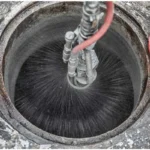
The process of applying polyurea to rehabilitate manholes is divided into the following steps to ensure that the adhesive force and the efficiency are properly met: Surface Preparation – It is very important to get the surface completely clean and ready for the application. Methods such as hydro or abrasive blasting are used to remove debris, grease and even peeled off material to make the surface ready for coating. This is because a contaminated surface will not form a good bond with the coating.
Primer Application – If the substrate is in a certain condition, a primer may be used to improve the bond strength and prevent moisture from causing problems.
Polyurea Spray Application – A high-pressure plural component system is used to apply polyurea in layers to the desired thickness. Quality Control and Inspection – After application, thickness measurements and adhesion tests are done to establish whether the coating is good and up to the standard required. This ensures that the product to be used is efficient and can be recommended for use.
The Future of Manhole Rehabilitation
As the need for sustainable and economical solutions for the aging infrastructure develops, polyurea will be used more frequently in manhole rehabilitation. Its adhesion strength, chemical resistance, and fast curing time make it suitable for increasing the service life of sewer systems with a minimum level of interruption. Thus, as the formulation and application technologies of polyurea coatings improve, these coatings will further establish themselves as the leading technology for infrastructure restoration. Thus, using the modern coating technologies, the cities and the utility providers will be able to cut on the maintenance costs, ensure the safety of the public and also sustainable wastewater management for the years to come. Manholes that were once considered as the least important part of the infrastructure are now getting the attention and the protection that they need to support increasing population density.

Frank Deluca
2 years agoWe used this article to help make the case for our first programmatic rehabilitation effort. The lifecycle cost data was especially useful in conversations with elected officials.